
10 Positive Parenting Strategies Every Parent Can Try

- Connect before you correct: warmth and eye contact invite genuine cooperation.
- Offer limited, empowering choices instead of blunt commands to dissolve power struggles.
- Hold firm boundaries with unconditional empathy for big emotional responses.
- Tell children what TO do instead of shouting what NOT to do.
- Model the exact emotional regulation and self-control you wish to see in your children.
Many parents want to move away from punitive methods like shouting, shaming, or isolating time-outs, but worry that positive parenting means being overly permissive. In truth, conscious positive parenting is both deeply kind AND unwaveringly firm. It maintains uncompromised boundaries for safety and respect while honoring the psychological dignity of the child.
Connection Before Correction
A child who feels understood and connected wants to cooperate. Before issuing an instruction, step into their physical space, bend down to eye level, touch their shoulder gently, and connect with a warm smile before speaking.
Describe What You See Instead of Accusing
Accusations trigger instant defensiveness. Instead of saying 'You made a mess again!', simply describe factually: 'I see puzzle pieces on the rug. Puzzles go in the box when we are finished.'
Offer Choices Within Boundaries
Autonomy is a biological drive in growing children. Give them power in harmless areas: 'Would you like to put on your blue jacket or yellow jacket?' or 'Do you want to brush your teeth before or after reading the story?'
Validate Feelings While Holding the Limit
Children are entitled to feel disappointed, angry, or sad. All feelings are acceptable; not all behaviors are. Say: 'I know how much you wanted to stay at the park, and it is time for dinner. You can be sad, and we still need to walk to the car.'
Frame Instructions Positively
The human brain struggles to process negatives in high arousal. Instead of 'Stop running inside!', give clear direction: 'Please use walking feet.' Instead of 'Don't yell!', say: 'Please use your quiet indoor voice.'
Involve Children in Collaborative Problem Solving
When chronic challenges arise (like morning routines or bedtime resistance), sit together during a calm moment. Ask: 'Mornings feel rushed for all of us. What can we do together so we leave on time without rushing?'
Utilize Natural & Logical Consequences
Punishments (like confiscating toys for unrelated misbehavior) build resentment. Logical consequences teach accountability. If toys are left on the driveway where they might get damaged, they rest in the closet until tomorrow.
Regulate Your Own Nervous System First
You cannot co-regulate an upset child if your own alarm bells are ringing. Before responding to defiance or tantrums, pause, exhale slowly, drop your shoulders, and speak in a lower, calmer tone.
Praise Effort and Character Over Perfection
Encourage the process rather than the outcome: 'I noticed how patiently you kept trying when that Lego tower fell down' builds resilience and a growth mindset far more than generic praise.
Prioritize Daily Micro-Connection Moments
Daily 10-minute special time refills your child's emotional tank. When a child's need for attention and belonging is proactively met through connection, disruptive behavior dramatically decreases.
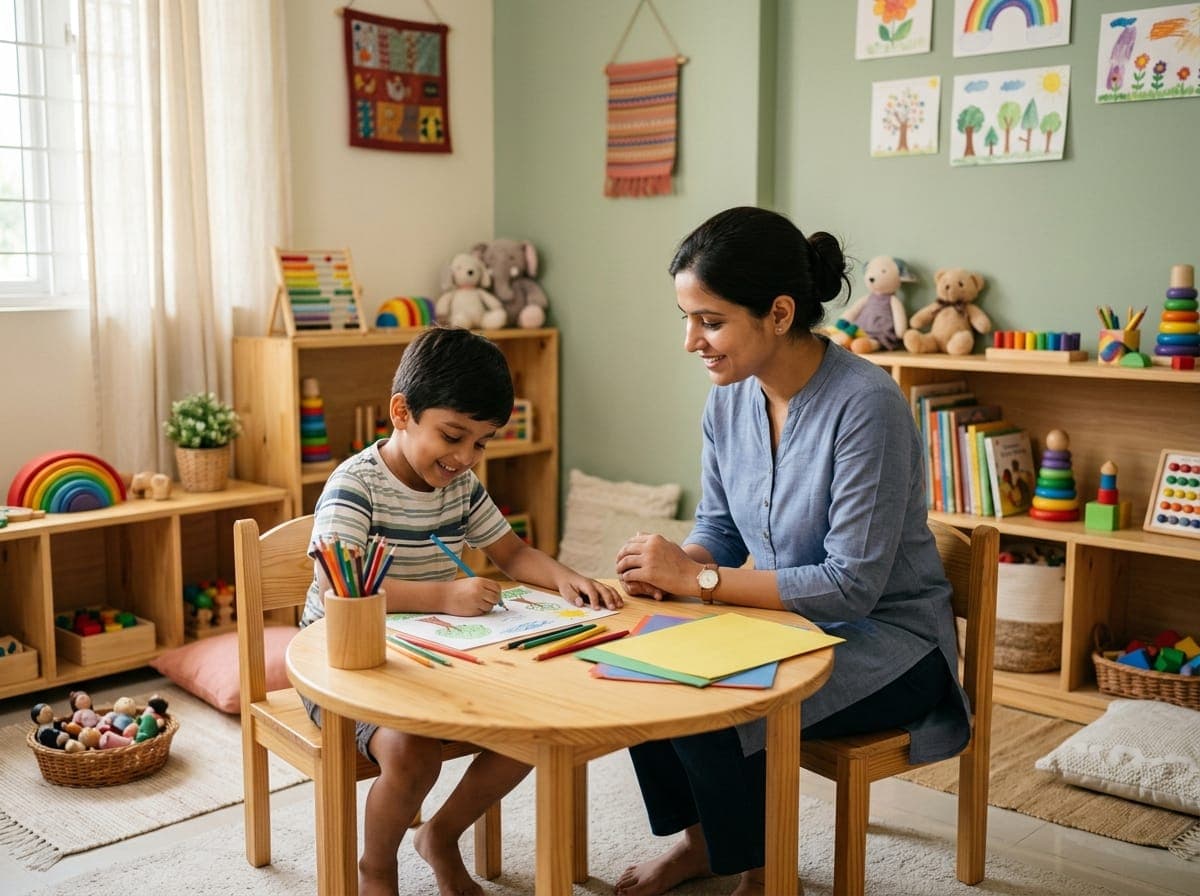
“The 10-Minute Special Time: Dedicate ten minutes each day to 100% uninterrupted, device-free 1-on-1 time where your child chooses and leads the activity without any parental criticism, directing, or correction.”
Looking for guidance tailored to your family?
Book a 1-on-1 consultation to build emotional calm, conscious boundaries, and step-by-step strategies for your child.
Continue Reading

5 min read • October 14, 2024
How to Handle Tantrums Without Losing Your Calm
A tantrum is not manipulation or defiance; it is an immature nervous system overwhelmed by sensory and emotional input. Here is how to stay anchored when your child is in emotional storm.

6 min read • October 22, 2024
How to Raise Emotionally Strong Children
Emotional resilience does not mean never feeling hurt or sad. It means knowing that feelings are temporary, manageable, and that you have the internal tools to rise through difficulty.
5 min read • October 27, 2024
How to Teach Children to Express Their Feelings
Children frequently act out physically because their emotional vocabulary is limited. Expanding their ability to name and communicate inner states transforms how they behave.